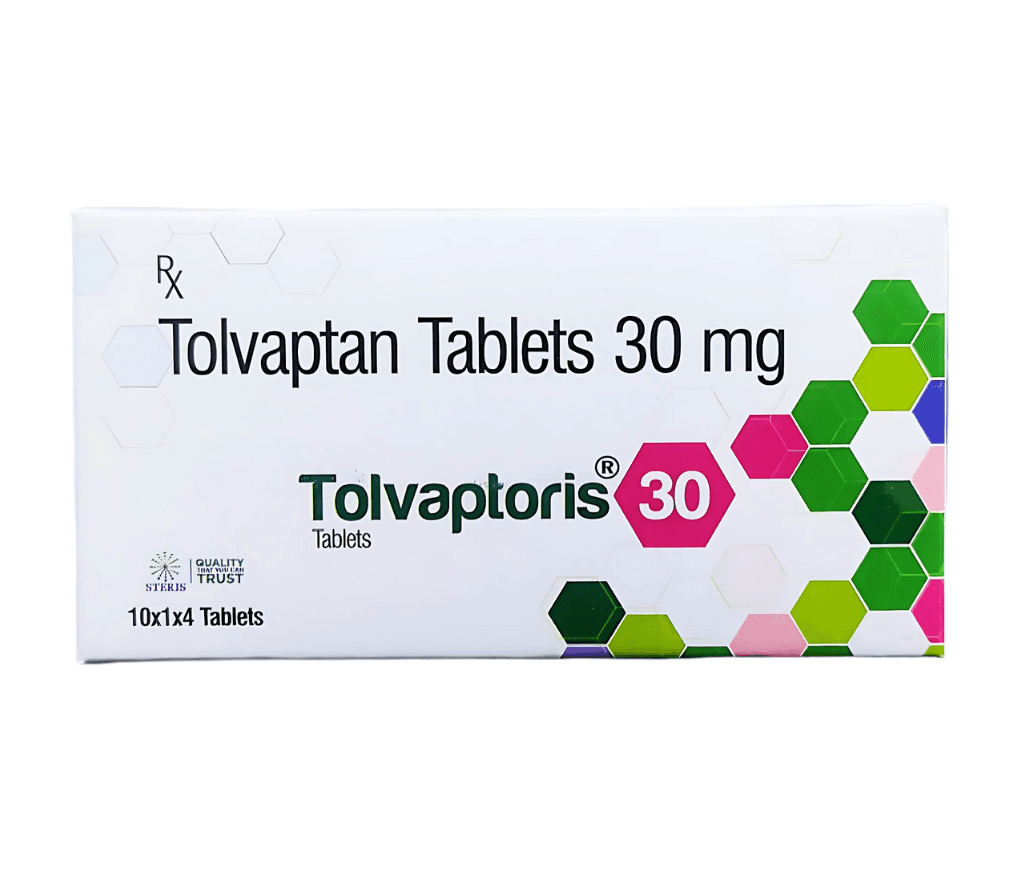
Tolvaptan 30 mg is a prescription medicine belonging to a class of drugs called vasopressin V2-receptor antagonists. It works by blocking the action of vasopressin, a hormone that helps the kidneys retain water. This action increases the excretion of excess water through urine while having a comparatively limited effect on sodium loss.
Depending on the approved product and treatment indication, tolvaptan may be prescribed for certain patients with clinically significant hyponatraemia (low blood sodium levels). Some tolvaptan formulations are also used under specialist supervision to slow kidney function decline in selected adults with autosomal dominant polycystic kidney disease (ADPKD). These indications have different dosing schedules, monitoring requirements, and treatment precautions.
Tolvaptan 30 mg should be used only under medical supervision. Treatment for hyponatraemia generally requires hospital initiation and close monitoring of blood sodium because correcting sodium too quickly can cause serious neurological complications. Long-term treatment for ADPKD requires regular liver-function monitoring because tolvaptan can cause serious liver injury.
कैसे उपयोग करें
Follow the prescribed regimen: Do not select your own dose or change the schedule. A 30 mg tablet may be used differently depending on the indication and product formulation.
Follow medical supervision requirements: When tolvaptan is prescribed for hyponatraemia, treatment initiation and re-initiation generally require a hospital setting where blood sodium can be monitored closely. Rapid correction of sodium can cause serious neurological injury.
Take it as directed: Follow the product leaflet regarding timing and food. Swallow the tablet as instructed by your pharmacist, and do not alter the dosage form unless the product information permits it.
Maintain appropriate fluid intake: Tolvaptan increases urine production and can cause thirst, dehydration, and reduced circulating blood volume. Follow your doctor's instructions about drinking fluids. Do not deliberately restrict fluids or force excessive water intake without medical guidance.
Attend scheduled blood tests: Your doctor may monitor blood sodium, hydration, kidney function, and other electrolytes. Patients receiving tolvaptan for ADPKD also require regular liver-function tests.
If you miss a dose: Follow the instructions for your specific product and indication. Do not double the next dose to compensate for a missed tablet.
Check for medicine interactions: Tell your doctor about all medicines and supplements you take. Certain antibiotics, antifungals, and other medicines can alter tolvaptan levels.
Do not stop or restart it independently: Contact your healthcare professional for instructions if treatment is interrupted, particularly if you are being treated for hyponatraemia.
Recognise warning signs: Seek urgent medical attention for severe weakness, confusion, fainting, inability to maintain hydration, or symptoms that may indicate liver injury, such as yellowing of the eyes or skin.
Important guidance
Safety advice
Check with your doctor
AlcoholConsult your doctor
Alcohol requires particular caution when taking Tolvaptan 30 mg. It may worsen dizziness, dehydration, and impaired judgement, while heavy alcohol consumption is an additional concern in patients at risk of liver injury or complications from low sodium. Avoid alcohol unless your treating doctor confirms it is appropriate for your condition.
PregnancyConsult your doctor
Tolvaptan is generally not recommended during pregnancy because human safety information is limited and animal studies have raised concerns about potential harm to the developing baby. Inform your doctor if you are pregnant, planning pregnancy, or suspect pregnancy. Your specialist should assess the risks and benefits and consider a suitable alternative where appropriate.
BreastfeedingConsult your doctor
Breastfeeding is generally not recommended during treatment with tolvaptan because its presence in human breast milk and its effects on infants are not adequately established. Potential concerns include dehydration, electrolyte disturbances, and other serious adverse effects. If you are breastfeeding or planning to breastfeed, discuss alternative treatment and feeding options with your healthcare professional before starting therapy. DailyMed +1
DrivingConsult your doctor
Tolvaptan 30 mg can cause increased urination, thirst, dehydration, weakness, or dizziness, which may affect concentration and driving ability. Avoid driving or operating machinery if you feel light-headed, weak, or unwell. Make sure you can maintain appropriate hydration according to your doctor's advice, and seek medical help if symptoms are severe or persistent.
KidneyConsult your doctor
Tolvaptan acts on the kidneys and may be prescribed for specific kidney-related conditions, including selected cases of ADPKD. However, suitability depends on kidney function, urine output, hydration, and the treatment indication. Patients with anuria, significant dehydration, or urinary outflow obstruction require particular caution or may be unsuitable for treatment. Kidney function and fluid balance should be assessed by a specialist.
LiverConsult your doctor
Tolvaptan can cause serious, potentially life-threatening liver injury, particularly during long-term treatment for ADPKD. Tell your doctor about any history of liver disease before starting treatment. Regular liver-function tests may be required before and throughout therapy. Seek prompt medical attention for yellow skin or eyes, dark urine, unusual fatigue, loss of appetite, or persistent upper abdominal discomfort. DailyMed
Clinical review pending
This page uses verified catalogue facts and responsible medicine-information rules. It supports awareness and does not replace a doctor's advice.